
Brakes Measured Before Any Parts Are Ordered
Brake repair in Mulliken for cars and trucks showing uneven wear, extended stopping distance, or pedal changes
Uneven pad wear, a pulsing brake pedal, or a pull to one side during braking are all signs that something in the brake system needs more than a visual glance to evaluate. JW's Automotive at 105 W Grand Ledge Hwy in Mulliken performs brake repair on cars and light trucks, measuring pads, rotors, calipers, and hydraulic lines before quoting any work. Because diagnosis and repair happen in the same shop, the technician who identifies a sticking caliper is the same one who replaces it, and the system is tested as a whole before the vehicle leaves.
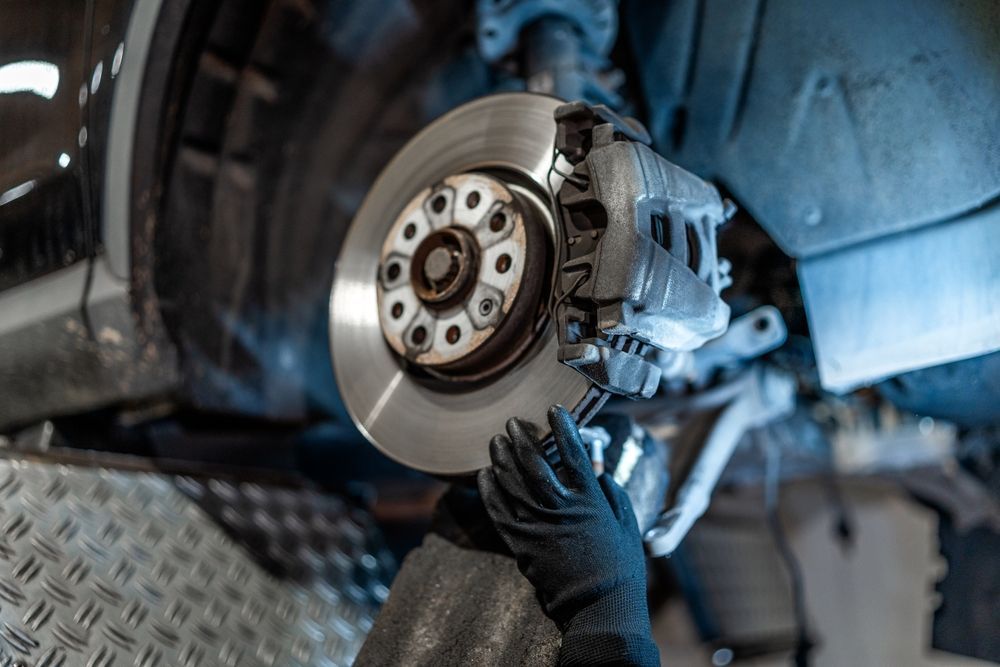
Brake inspections at JW's begin with the wheels off the vehicle. Pad thickness is measured against minimum spec, rotors are checked for surface condition and thickness variation that causes pedal pulsation, and the calipers are inspected for uneven piston movement and fluid seepage at the boots. Brake fluid condition is also evaluated, since degraded fluid with absorbed moisture lowers the boiling point and affects pedal feel under repeated hard stops. Worn components are quoted before the repair begins, and the hydraulic system is bled after new parts are installed.
Bring your vehicle to JW's Automotive for a brake inspection that measures the full system, not just the pads.
What Proper Brake Service Requires
A brake job done correctly involves more than swapping pads. Rotors that are within minimum thickness but show hard spots or thickness variation will produce pedal pulsation even with new pads installed, because the pad compounds into the uneven surface under heat. Calipers with pistons that don't retract evenly create the uneven wear pattern that brings many vehicles in for service in the first place. Addressing only the pads while leaving a marginal rotor or a dragging caliper in place produces a repair that fails faster than it should.
After the repair is complete, what changes is definitive: the pedal firms up at a consistent height, stopping distance returns to normal, and the vehicle tracks straight under braking without pulling. Rural commuters in the Lake Odessa and Ionia areas who regularly alternate between open highway speeds and town stops place specific demands on brake systems, and a properly serviced setup handles that pattern without accelerated wear on one axle.
JW's Automotive handles brake work alongside the engine, electrical, and cooling system repairs done at the same shop, which allows a brake inspection to flag related issues—such as a differential fluid leak coating a rear drum or a soft line showing heat damage near the exhaust—that a brake-only shop would not be positioned to address.
What Vehicle Owners Ask About Brake Work
The questions below focus on how brake repairs are performed at JW's Automotive and what the inspection and repair process involves.
How is rotor condition evaluated during a brake inspection?
Rotor thickness is measured at multiple points around the face to detect thickness variation, and the surface is inspected for hard spots, scoring, and heat discoloration that indicate whether resurfacing or replacement is the appropriate response.
Why do brakes wear unevenly between the front and rear axles?
Front brakes handle the majority of stopping force under deceleration due to weight transfer, so front pads wear faster than rear pads as a matter of physics, but uneven wear within a single axle usually points to a caliper piston that is not releasing cleanly.
What does brake fluid condition have to do with pedal feel?
Brake fluid absorbs moisture over time, which lowers its boiling point, and fluid that has degraded can vapor-lock under repeated hard stops, producing a soft or spongy pedal that firms up after the system cools.
When should brake lines and hoses be inspected rather than just the pads and rotors?
Rubber flex hoses can deteriorate internally and act as a one-way valve, allowing pressure to apply a caliper but preventing it from releasing, which creates a dragging brake and accelerated one-sided rotor wear.
How is the brake system checked after new parts are installed?
The hydraulic system is bled to remove air, pedal travel and firmness are confirmed before the vehicle moves, and a road test verifies that the vehicle stops straight and that the pedal holds consistent height under repeated application.
JW's Automotive also performs brake repair in Grand Ledge, Charlotte, Holt, and Lake Odessa. To have your brake system measured and evaluated by the team that will also complete the repair, arrange an inspection at JW's Automotive.