Worn Suspension Parts Diagnosed Before Any Work Begins
Steering and suspension repair in Mulliken for vehicles showing pull, wander, or uneven tire wear on county and rural roads
Gravel township roads and potholed town streets load ball joints, tie rods, and control arms in ways that highway miles simply do not—repeated sharp impacts rather than smooth rolling stress accelerate wear in the pivoting and bushed components that make up the steering and suspension system. JW's Automotive in Ionia and Mulliken diagnoses these systems before any parts are ordered, so you know exactly what is failing and what the repair will involve before work starts. That sequence—inspect and report first, then get approval, then replace—keeps surprises off the final invoice.
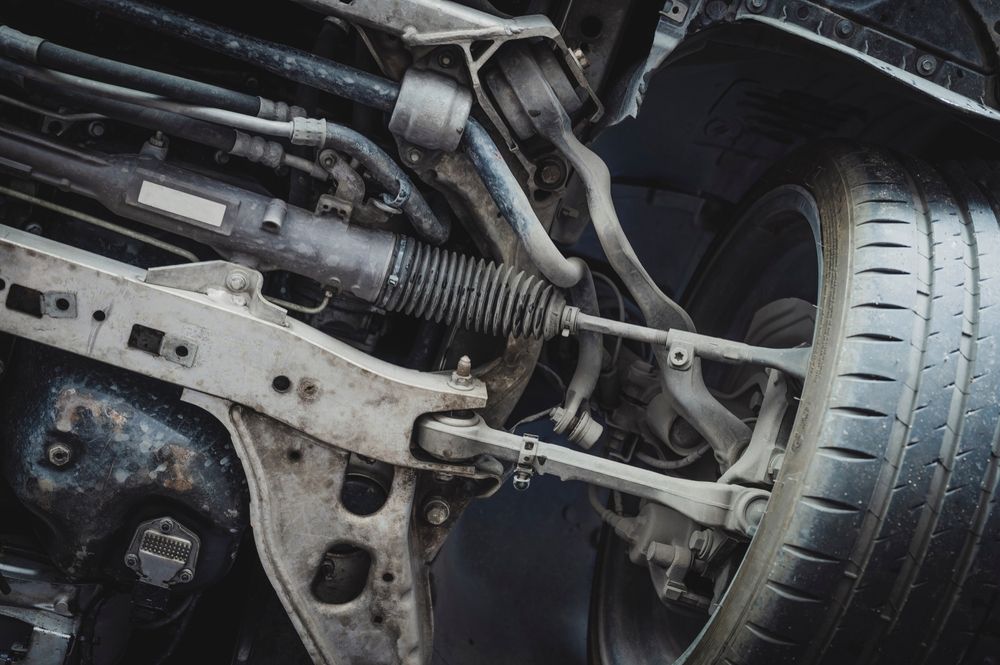
The shop inspects the full steering linkage, ball joints, bushings, and shocks or struts, working through the system to identify which components have reached the end of their service life versus which are worn but not yet critical. Suspension repair done correctly also accounts for the step that follows: replacing struts or control arms changes the vehicle's alignment geometry, so JW's Automotive coordinates alignment service after the suspension work is finished rather than treating it as a separate unrelated job.
Arrange an inspection at JW's Automotive to get a clear report on which steering or suspension components need attention and what the repair sequence will look like.
Why [Suspension Diagnosis] Comes Before Parts
Steering and suspension problems frequently share symptoms—a vehicle that pulls left could indicate a worn tie rod, a failing ball joint, uneven tire pressure, or an alignment that shifted after a hard impact. Ordering parts before completing a full inspection risks replacing the wrong component or missing a second failure that will show up again within a few thousand miles. At JW's Automotive, the crew works through the system methodically: steering linkage, pivot points, bushings, and shock or strut condition are all evaluated before a repair estimate is written.
Once failed components are replaced, the observable changes are straightforward: the vehicle tracks straight without driver correction, the steering wheel returns to center normally, and the shimmy or pull that made highway driving tiring stops. Tire wear that was running at the edge of one shoulder also stabilizes once the geometry is restored, which is particularly noticeable on pickups and SUVs running mixed highway and gravel routes in Ionia and the surrounding area.
Because suspension geometry changes when major components are replaced, alignment is treated as part of the process rather than an optional add-on. JW's Automotive coordinates that step so the vehicle is set to specification before it leaves, rather than sending it out with new parts but uncorrected angles.
What Property Owners Ask About the Work
Suspension repairs raise specific questions about sequencing and what to expect, especially when a vehicle has been showing symptoms for a while and multiple parts may be involved.
What does the inspection process actually cover?
The shop examines steering linkage, ball joints, tie rod ends, control arm bushings, and shock or strut condition, checking each pivot and bushing point for play or deterioration before writing any estimate.
How do you know which suspension parts are failing versus just worn?
Ball joints and tie rod ends are checked for play beyond the manufacturer's tolerance using specific movement tests; a part that has measurable slop beyond that threshold is failing, while one with minor wear but within spec is noted but not replaced.
Why does suspension work require an alignment afterward?
Replacing struts, control arms, or tie rods physically changes the angles at which the wheels contact the road, so driving on new parts without resetting alignment angles will wear the new tires unevenly within a short period.
What signs indicate a ball joint or tie rod is failing rather than just worn?
Audible clunking over bumps, a steering wheel that does not return to center after a turn, or a vehicle that wanders at highway speed are common indicators that a pivot component has moved beyond acceptable tolerances.
How does driving on gravel and rural roads in Mulliken and Ionia affect suspension wear rates?
Unpaved and rough-surfaced roads deliver repeated sharp vertical and lateral loads to ball joints and bushings rather than the gradual rolling stress of highway miles, which can shorten service life significantly compared to manufacturer estimates based on mixed driving.
JW's Automotive also handles steering and suspension repairs for vehicles from Grand Ledge, Charlotte, Holt, and Lake Odessa. Call (517) 731-6496 to schedule a full suspension inspection and get a written report before any repair work is approved.