
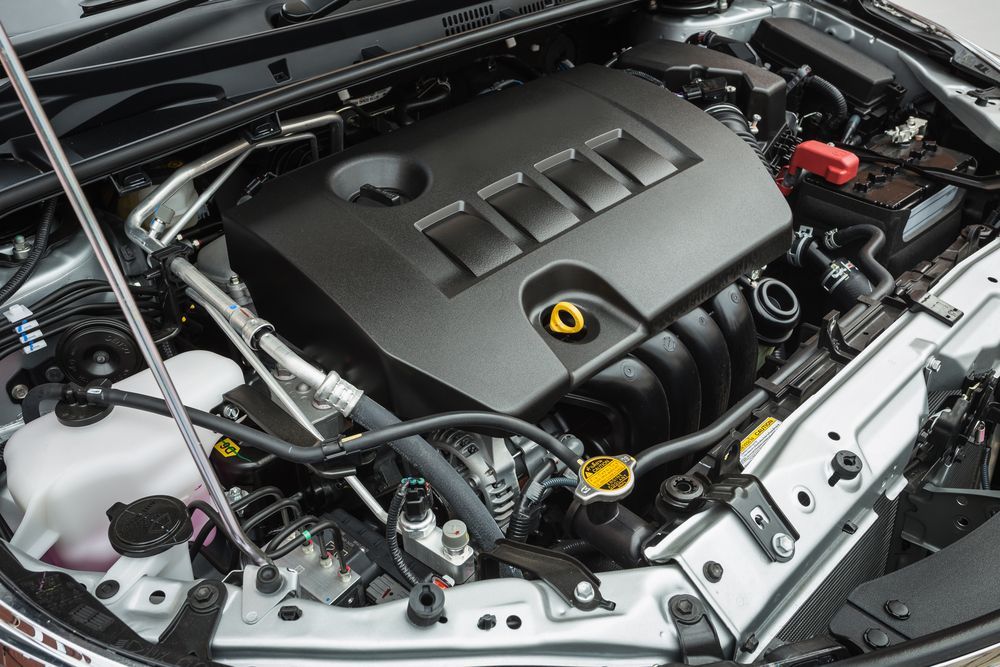
Ignition and Fuel Systems Checked Against Spec
Tuneups in Mulliken for daily drivers with high mileage showing reduced fuel economy or rough idle
Most vehicles in the Mulliken and Lake Odessa area are working daily commuter cars and trucks with accumulated mileage on original or near-original ignition components. Wear in spark plugs, air filters, and fuel delivery parts builds gradually — economy drops a noticeable amount before hesitation appears, and hesitation shows up well before a misfire code sets. By the time a check engine light comes on for ignition-related wear, the vehicle has typically been operating below its efficient range for months.
JW's Automotive performs complete tune-ups on gasoline vehicles in Mulliken, checking spark plugs, ignition components, air and fuel filters, and fluid levels against the manufacturer's maintenance schedule for that specific vehicle. The technician reviews your vehicle's service history first to establish what has already been replaced and what the manufacturer's interval calls for — so the tune-up is based on actual condition and documented maintenance rather than a generic parts list. Because the shop runs full-system diagnostics in-house, any related fault that surfaces during the ignition inspection is identified and reported at the same time rather than discovered later.
Arrange a tune-up service to have your vehicle's ignition and fuel delivery systems evaluated against current manufacturer specifications.
What Proper Tune-Up Service Requires
The process begins with a review of the vehicle's service history and the manufacturer's maintenance interval for that engine type — extended-life iridium or platinum spark plugs, for example, have intervals up to 100,000 miles on some engines, while copper plugs on older designs may call for replacement at 30,000. That distinction matters because replacing plugs ahead of schedule on an iridium-equipped engine wastes the investment in the original set, while running copper plugs past interval introduces misfire risk that is invisible until combustion efficiency drops. Air filter condition is checked against restriction rather than mileage alone, since rural and gravel-road driving common around Mulliken loads a filter faster than the same distance on paved highway.
After the approved service scope is completed, what becomes noticeable is a return to the idle quality and throttle response the engine produced when ignition components were fresh. Fuel economy typically recovers to near the vehicle's rated efficiency, and the hesitation on acceleration that often builds so gradually it goes unremarked tends to clear. Any worn part found during the inspection is called out before work begins — nothing beyond the approved tune-up scope is performed without explicit sign-off.
Core-charge parts — including spark plugs in some cases — are handled transparently at the counter at JW's Automotive, so the transaction accounts for returned cores without requiring a separate trip. Fluid levels checked during a tune-up are reported with condition noted, and any fluid that is due for service based on manufacturer interval is identified separately as an item to address rather than quietly added to the invoice.
What to Know Before Your Tune-Up
The following questions address how a tune-up is conducted, what the process includes, and how the work is scoped and approved before anything is replaced.
How does the shop determine which spark plug type and interval applies to your vehicle?
The technician checks the manufacturer's specification for that engine, which specifies plug type, gap, and replacement interval — because installing the wrong heat range or gapping a plug incorrectly for the compression ratio of that engine affects combustion efficiency regardless of whether the plug is new.
What happens if additional wear is found during the ignition inspection?
Any item found outside of the approved tune-up scope is reported to you separately with an explanation of what was found and why it matters — no additional work is performed until you have reviewed and approved it, which is why the service history review comes before any parts are touched.
Why does air filter condition vary by driving pattern rather than mileage alone?
A vehicle driven regularly on unpaved roads or gravel surfaces near Mulliken draws significantly more particulate through the intake than one driving the same mileage on paved roads — so filter restriction is checked by inspection rather than replaced automatically at a fixed interval.
What is the difference between a tune-up and a full diagnostic inspection?
A tune-up addresses scheduled maintenance items — plugs, filters, fluid levels — within the manufacturer's maintenance framework; a full diagnostic inspection evaluates system performance against specification and identifies faults or wear outside the maintenance schedule. JW's Automotive can perform both in the same visit when service history indicates both are due.
How does reviewing the vehicle's service history affect what the tune-up includes?
If recent records show plugs were replaced 15,000 miles ago on a long-interval engine, the inspection confirms condition rather than automatically replacing them — preventing unnecessary parts cost while still confirming the ignition system is performing within specification.
JW's Automotive also performs tune-up service in Grand Ledge, Charlotte, Holt, and Lake Odessa. To have your vehicle's maintenance schedule reviewed and a tune-up scoped to what is actually due, call JW's Automotive at (517) 731-6496.