Fault Confirmed Before Any Repair Begins
Full vehicle diagnostics in Mulliken for warning lights, intermittent faults, and multi-system failures that produce unclear symptoms
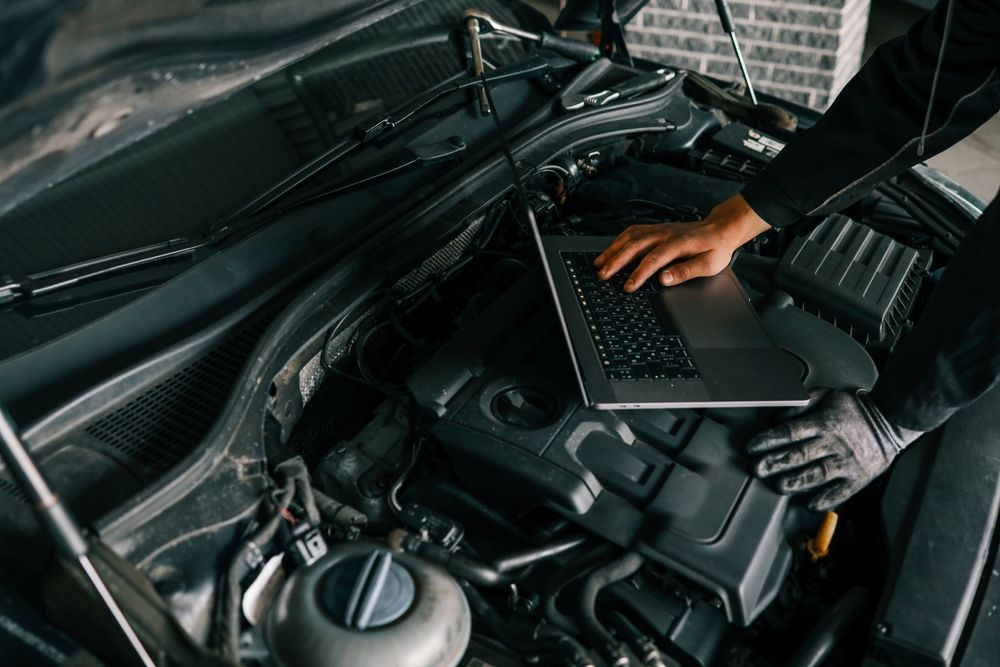
A check engine light that returns after a part has already been replaced, an intermittent stall that does not produce a consistent code, or a vehicle that fails an emissions test without an obvious fault all point to the same problem: the symptom has been addressed but the cause has not been confirmed. JW's Automotive runs full system diagnostics on vehicles with unclear problems, reading fault codes across all available modules and cross-referencing them against live sensor data before any repair is recommended. The shop in Mulliken completes both the diagnosis and the repair, so the findings from the scan directly drive the work order rather than being handed off to a second shop to interpret.
Many vehicles traveling between Grand Ledge and Mulliken are older models with multiple electronic control modules—engine, transmission, ABS, and body systems—where a single warning light can have several plausible causes in different parts of the vehicle. Pulling a code and ordering the part it suggests without verifying the underlying sensor readings and actuator responses is how diagnostic costs multiply. JW's confirms the actual fault first: live data streams, component-level tests, and circuit checks narrow the problem to a specific failure before anything is quoted.
Request a full system scan at JW's Automotive to identify the specific fault driving your warning light or symptom before any repair work is planned.
Why Confirming the Cause Changes the Repair
Diagnostic work at JW's goes beyond reading stored fault codes. A code identifies which system reported an out-of-range condition, but it does not by itself identify whether the failure is in a sensor, the wiring to that sensor, the component the sensor monitors, or the module interpreting the signal. Live data monitoring during engine operation, actuator command tests, and voltage drop checks on circuits are the tools that isolate the actual failure point, and that distinction determines whether the repair is a twenty-dollar sensor or a more involved wiring repair.
Once the diagnostic is complete, the findings are specific: the fault is attributed to an identified component or circuit, not described as a possibility. After repair, the warning light clears and stays off under normal operating conditions because the cause was addressed rather than the symptom. Vehicles that have been through multiple parts replacements without resolution frequently leave JW's with the original warning light gone because the diagnostic process identified what prior guesswork missed.
Because JW's performs engine, transmission, electrical, and emissions work in the same facility, a diagnostic finding that points to a transmission solenoid or an evaporative emissions leak can be handed directly to the repair side of the shop without the vehicle moving to another location or the findings being re-explained to a different technician.
Answers About How the Work Is Done
The following questions address how vehicle diagnostics are performed at JW's Automotive and what the process involves for vehicles with complex or recurring faults.
What is the difference between reading a code and performing a full diagnostic?
Reading a code identifies which system logged a fault; a full diagnostic uses live data, actuator tests, and circuit measurement to confirm which specific component or wiring path caused the code, which is the information required to select the correct repair.
How does a technician handle a fault code that has more than one likely cause?
The technician checks live sensor output against expected values at operating temperature, commands actuators through their full range, and performs voltage and resistance checks on the circuit to eliminate possibilities until only one cause remains consistent with all the data.
Why do some warning lights return after a part has already been replaced?
A code that recurs after a part replacement usually means the code pointed to a system rather than a component, and the replaced part was one of several possible causes that was not verified against live data before the repair was made.
What types of systems are covered in a full scan on vehicles common in the Grand Ledge area?
Older domestic vehicles common in this region often have separate modules for engine management, transmission control, ABS, and supplemental restraints, and a full scan reads fault memory and live data from each module rather than just the powertrain system.
How is the diagnostic confirmed once the repair is completed?
After the repair, fault codes are cleared and the vehicle is operated through the drive cycle conditions that originally triggered the fault to confirm the system runs clean and does not re-log the code under real operating conditions.
JW's Automotive also performs full vehicle diagnostics in Grand Ledge, Charlotte, Holt, and Lake Odessa. To have your vehicle's fault identified before any repair is committed to, bring it to JW's Automotive for a complete system evaluation.