Alignment Done as the Final Step, Not an Afterthought
Wheel alignment in Mulliken for vehicles that have hit curbs, rough shoulders, or recently had suspension and steering work completed
What alignment actually corrects is not something most drivers can see directly—it is measured in fractions of a degree across three angles per wheel—but the effects show up clearly in how the vehicle tracks, how the steering responds, and how quickly tires wear at their edges. JW's Automotive coordinates wheel alignment as part of its repair process, scheduling it as the last step after suspension, steering, or tire work is finished so the angles are set against the vehicle's actual repaired condition. The alignment itself is performed at a dedicated alignment shop, with JW's managing the sequencing so repairs are complete before the measurement begins.
Drivers in Grand Ledge and Charlotte regularly bring in vehicles after impacts with curbs or rough road shoulders, and alignment is the check that determines what those impacts actually displaced. A hard strike can shift toe settings or camber angles without breaking any visible component, and the result—mild but persistent pull, slightly off-center steering wheel, or accelerated edge wear—accumulates over thousands of miles before it is obvious. Catching that shift immediately after the impact, before it consumes a set of tires, is the practical case for alignment as a post-event check rather than a mileage-interval routine.
Schedule an alignment check with JW's Automotive after any suspension or steering repair, or following an impact that changed how the vehicle handles, to confirm the angles are set correctly before putting more miles on.
How Alignment Measurement Works for a Repaired Vehicle
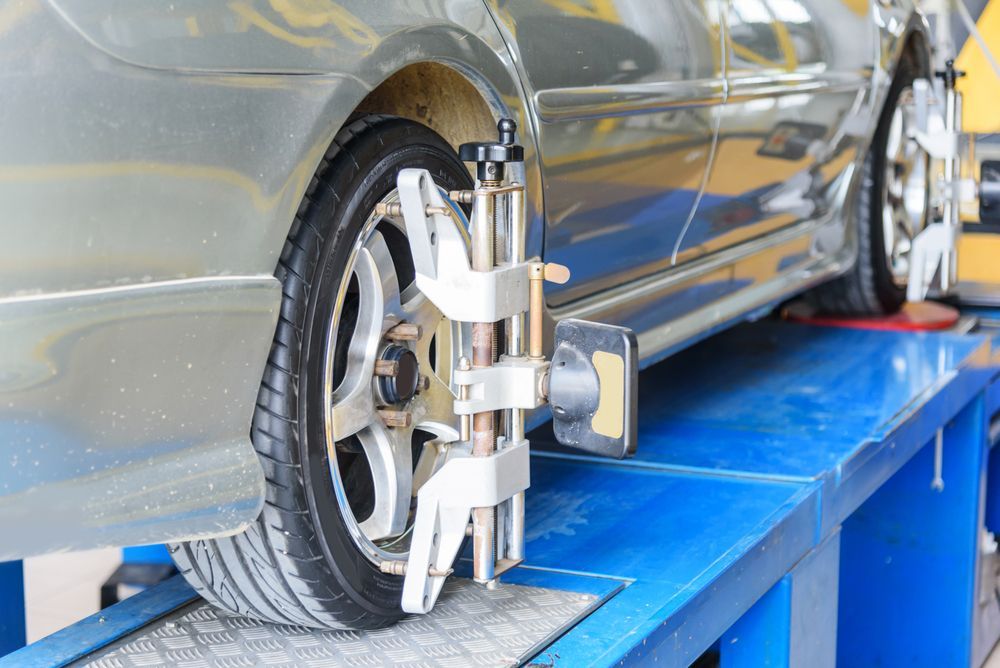
Alignment measurement involves setting sensors on each wheel and comparing the actual toe, camber, and caster readings to the manufacturer's specification for that vehicle. The adjustment process varies by vehicle design: some allow adjustment at multiple points, others have limited or fixed geometry that narrows what can be corrected. Using a dedicated alignment shop for this step—rather than a general service bay with a rack that handles alignment among many other functions—means the measurement equipment is set up and calibrated specifically for that task, and the technician interpreting the readings works with alignment data regularly.
After alignment is completed to specification, a vehicle that was pulling to one side will track straight with the steering wheel centered, and the driver effort required to hold a lane on a straight road drops noticeably. Tire wear that was loading the inner or outer shoulder stabilizes across the full tread contact patch, which becomes visible as even wear over subsequent miles rather than continued edge degradation. JW's Automotive manages the scheduling so these results reflect the vehicle's actual post-repair geometry, not a measurement taken before the mechanical work was done.
The timing sequence JW's Automotive uses—mechanical and tire work completed the day prior, alignment scheduled the following day—is not an arbitrary split. It ensures the alignment measurement captures the geometry of the repaired vehicle, which would otherwise shift again the moment worn or replaced suspension components changed their position.
Answers About How the Work Is Done
Alignment is often misunderstood as a simple calibration when it is actually a measurement-and-adjustment process that depends heavily on sequencing and equipment. These questions address how it actually works.
Why does JW's Automotive use a dedicated alignment shop rather than handling it in the same bay as other repairs?
Dedicated alignment equipment maintains tighter calibration standards and the technicians using it work with toe, camber, and caster measurements as their primary function, which produces more consistent results than alignment handled as one task among many at a general service bay.
What gets measured during a wheel alignment?
The shop measures toe—the angle at which the front of the tire points inward or outward—camber, which is the vertical tilt of the wheel, and caster, the angle of the steering axis, comparing each reading to the manufacturer's specification for that vehicle's configuration and load rating.
How does an impact with a curb or rough shoulder in Grand Ledge or Charlotte affect alignment angles?
A hard lateral or vertical impact can displace tie rod ends, shift control arm positions, or deflect wheel bearing assemblies enough to push toe or camber outside specification without breaking any component visibly, making alignment the diagnostic step that quantifies the actual displacement.
When in the repair sequence should alignment be scheduled?
Alignment should always follow suspension and steering work, not precede it—replacing a tie rod end or strut changes the angles the alignment is intended to set, so measurement done before those repairs are complete will not reflect the vehicle's actual geometry after the work is finished.
What does the vehicle do differently after alignment is corrected?
The steering wheel sits centered on a straight road, the vehicle does not require continuous correction to hold a lane, and tire wear distributes evenly across the tread surface rather than loading one edge—all of which become apparent within the first drive after the alignment is completed.
JW's Automotive also handles wheel alignment coordination for vehicles from Grand Ledge, Charlotte, Holt, and Lake Odessa. Call (517) 731-6496 to discuss your vehicle's repair history and set up the alignment step in the right sequence for your specific job.